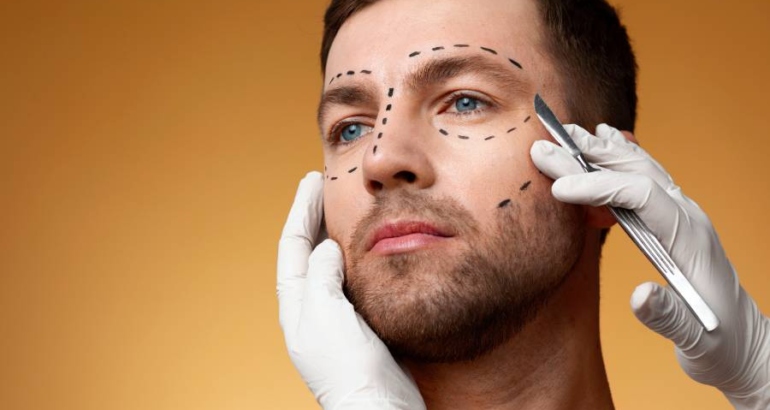
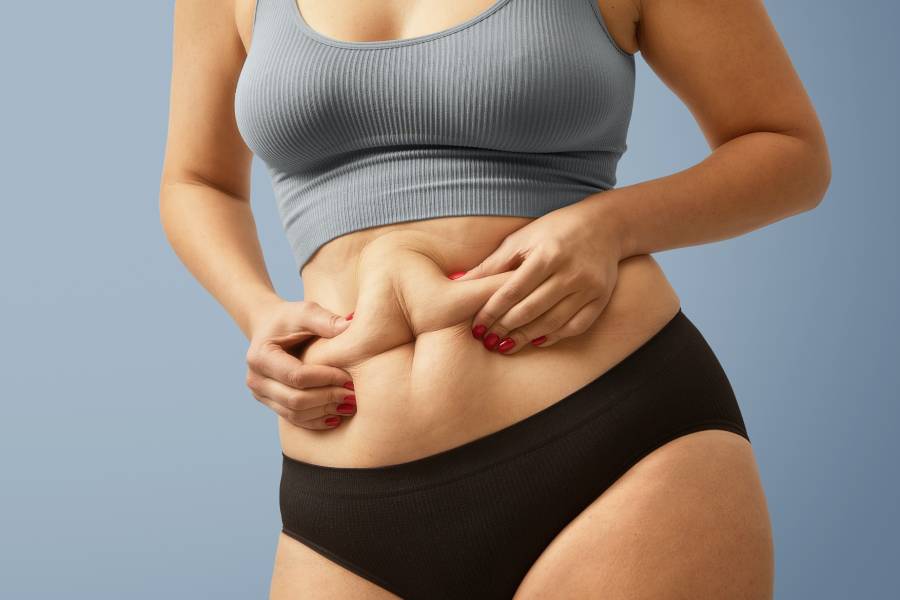
Creating a flatter abdomen is only one part of a well-planned tummy tuck. How surgeons create a natural waistline during tummy tuck surgery depends on a much broader assessment: the patient’s rib cage, pelvis, existing waist-to-hip ratio, abdominal wall, skin quality, fat distribution and personal goals all influence what can be achieved safely.
During tummy tuck surgery, the surgeon may remove excess skin, repair stretched abdominal fascia, reposition the remaining tissues and use selective liposuction to improve transitions between the abdomen, waist and hips. These steps must work together. Removing too much fat, tightening in the wrong direction or applying the same template to every body can create an unnatural contour rather than a balanced result.
A natural waistline after tummy tuck surgery should suit the patient’s original frame. It does not mean that every patient will—or should—develop an extreme hourglass figure. The goal is usually a smoother abdominal profile, improved central support and more proportionate contours that look coherent from the front, side and back.
What Does a “Natural Waistline” Mean in Tummy Tuck Surgery?
A natural waistline is a balanced transition between the rib cage, abdomen, flanks and hips that remains proportionate to the patient’s skeleton and surrounding tissues. It should not appear pinched, sharply hollowed or disconnected from the rest of the torso.
The visible waist is influenced by several structures:
The width and shape of the rib cage
Pelvic width and hip projection
The position and tone of the abdominal wall
Separation of the rectus muscles and stretching of the fascia
Skin laxity and the direction in which the skin has stretched
Fat beneath the skin and deeper internal fat
The contour of the flanks, lower back and hips
Posture, muscle tone and overall body weight
Tummy tuck waist contouring can improve some of these factors, but it cannot change the width of the ribs or pelvis. It also cannot safely remove internal visceral fat, which lies around the abdominal organs. A responsible plan begins by identifying which components are surgically correctable and which are fixed anatomical limitations.
How Surgeons Create a Natural Waistline During Tummy Tuck Surgery
Surgeons create a natural waistline by combining anatomical assessment, tailored skin removal, repair of stretched abdominal fascia when indicated, careful incision and navel planning, and selective contouring of excess subcutaneous fat. The exact combination varies because skin, muscle support and fat distribution contribute differently in every patient.
1. Evaluating the Entire Torso, Not Only the Lower Abdomen
Abdominal contouring surgery should be planned as a three-dimensional procedure. A flat lower abdomen can still look unbalanced if the flanks remain disproportionately full, the upper abdomen projects, or the hip transition is irregular.
During consultation, the surgeon examines the patient standing and lying down. The assessment may include the upper and lower abdomen, waist, flanks, lower back, hips, pubic region, old scars and any hernia or abdominal-wall weakness. Standardized photographs help evaluate symmetry and proportions from multiple angles.
This examination also distinguishes loose skin from subcutaneous fat, fascial laxity and visceral fullness. Each requires a different response. Liposuction may reduce pinchable fat, whereas muscle repair during tummy tuck surgery addresses stretched central support. Neither treatment can replace weight loss or remove fat surrounding the organs.
2. Planning Skin Removal Around the Patient’s Anatomy
A full abdominoplasty usually removes an ellipse of excess lower-abdominal skin and advances the upper skin downward. The amount and direction of removal affect both the central abdomen and the waist. Too little removal may leave laxity; too much can place excessive tension on the closure, distort the pubic area or compromise healing.
The surgeon also plans how far the incision needs to extend. A shorter incision is not automatically better. If excess skin reaches toward the flanks, a longer or extended incision may create a smoother lateral contour and avoid bunching at the scar ends. Scar length should therefore reflect the distribution of laxity rather than a marketing promise.
Whenever possible, the final scar is planned low enough to be concealed by underwear or swimwear. Existing Caesarean-section scars may sometimes be incorporated. However, scar height and length are also limited by tissue mobility, previous operations and safe closure.
3. Repairing Diastasis Recti and Stretched Fascia
Pregnancy and major weight fluctuation can stretch the midline connective tissue between the rectus muscles. This is known as diastasis recti. Although people often call the corrective step “muscle repair,” surgeons generally place sutures in the strong fascial layer covering the muscles rather than cutting or shortening the muscles themselves.
Diastasis recti repair can bring the central abdominal wall into a firmer position and reduce a rounded or forward-projecting profile. Depending on the anatomy, fascial plication may also contribute to a narrower-looking waist. The repair must be individualized: excessive tightening can cause discomfort, impair normal function or create an unnatural shape.
Not every patient has diastasis, and not every separation requires the same repair. A suspected hernia may require further evaluation and, in selected cases, coordination with another surgical specialist. Tummy tuck surgery is not a substitute for treatment of an undiagnosed abdominal-wall condition.
4. Using Liposuction to Refine the Waist and Flanks
A tummy tuck with liposuction may address both loose skin and localized subcutaneous fat. When combined within an appropriate safety plan, liposuction can soften fullness at the flanks, improve the transition from the upper abdomen to the waist and prevent the treated abdomen from looking isolated from the surrounding torso.
This combined approach is often called lipoabdominoplasty. The location and volume of liposuction are tailored to tissue thickness, blood supply, skin quality and overall surgical risk. Aggressive fat removal is not always safer or more attractive. Over-treatment can cause contour irregularities, prolonged swelling, tissue injury or a hollowed appearance.
The surgeon must also protect blood flow to the skin that is being elevated and repositioned. This is one reason that the amount of liposuction suitable for one patient may be inappropriate for another. Safe tummy tuck waist contouring depends on restraint as well as technique.
5. Creating a Natural-Looking Belly Button
In a full tummy tuck, the navel usually remains attached to the abdominal wall while the surrounding skin is moved. A new opening is then created so the belly button can emerge through the redraped skin.
Its position, size, depth, orientation and scar placement can strongly influence whether tummy tuck results look natural. A navel that is too round, too large, too high or surrounded by a visible circular scar may draw attention to the operation. The design should match the torso and settle into a subtle, anatomically believable shape.
A mini tummy tuck usually does not require the same navel relocation, but it only treats selected lower-abdominal concerns. Choosing a mini procedure solely to avoid an umbilical scar may leave upper-abdominal laxity untreated.
6. Balancing the Waist With the Hips and Upper Body
An hourglass tummy tuck is a descriptive marketing term rather than one standardized operation. Some patients naturally have a pronounced difference between waist and hip width; others have a straighter skeletal frame. Surgery can refine soft-tissue contours but cannot safely manufacture the same silhouette in every body.
The surgeon therefore considers shoulder width, rib cage, pelvis, hip volume and buttock projection when shaping the waist. In some cases, selective flank liposuction may be enough to improve proportion. Other patients may discuss broader body contouring surgery, but adding procedures increases operative time, healing demands and risk.
Natural tummy tuck results come from working with the existing frame—not forcing the torso toward a trend or edited reference image.
Which Type of Tummy Tuck Best Supports Waist Contouring?
There is no universally best technique. The operation should match the location and degree of skin excess, abdominal-wall laxity, scars and desired correction.
Full Tummy Tuck
A full tummy tuck generally treats laxity above and below the navel. It commonly includes lower-abdominal skin removal, repositioning of the navel and fascial repair when required. It may suit patients after pregnancy or substantial weight change whose concerns extend across most of the abdomen.
Mini Tummy Tuck
A mini tummy tuck treats limited skin laxity below the navel through a shorter treatment area. It may be appropriate when upper-abdominal skin and muscle support are relatively good. It cannot provide the same correction as a full abdominoplasty when laxity or diastasis extends higher.
Extended Abdominoplasty
An extended tummy tuck carries the incision farther toward the sides to address skin excess that continues into the flanks. This may create a smoother waist transition in selected post-weight-loss patients, although the trade-off is a longer scar.
Fleur-de-Lis and Circumferential Procedures
After major weight loss, skin may be loose both vertically and horizontally. A fleur-de-lis abdominoplasty adds a vertical scar to remove central horizontal laxity. A lower body lift or circumferential procedure treats tissue around more of the torso. These are more extensive operations with greater scar and recovery considerations.
The name of the technique matters less than whether its treatment area matches the patient’s anatomy.
Are Implants Used to Create the Waistline?
Implants are not a standard part of tummy tuck surgery and are not routinely used to make the waist narrower. Abdominal muscle implants exist in highly selected aesthetic or reconstructive contexts, but they add volume rather than remove laxity and carry implant-related risks such as infection, displacement, palpability, asymmetry and possible revision.
For most tummy tuck patients, contour is created through skin removal, fascial repair and selective fat reduction—not an implant. If a patient wants greater hip or buttock volume to alter the waist-to-hip ratio, the surgeon must discuss separate procedures and their specific risks. Such augmentation should never be treated as an automatic add-on to abdominoplasty.
Who Is a Good Candidate for Personalized Tummy Tuck Surgery?
Potential candidates commonly have loose abdominal skin, separated abdominal muscles, localized fat or a persistent abdominal contour that does not improve adequately with stable weight and exercise. Good candidates are generally healthy, have realistic expectations and can follow recovery restrictions.
Candidacy is less favorable when a patient:
Smokes or uses nicotine and cannot stop for the required period
Has uncontrolled diabetes, significant heart or lung disease, clotting risk or another condition that increases complications
Plans substantial future weight loss
Is considering a future pregnancy
Expects surgery to produce major weight loss or an anatomy that their skeleton cannot support
Cannot arrange adequate postoperative help or follow-up
Body mass index is only one part of risk assessment, but higher weight can increase wound, anesthesia and clot-related risks. The surgeon should evaluate health, fat distribution, nutritional status and the extent of surgery rather than relying on one number alone.
What Happens During Abdominoplasty Surgery?
Abdominoplasty surgery is usually performed under general anesthesia in an appropriately equipped facility. The exact sequence varies, but may include:
Marking the planned incision, midline, areas of laxity and liposuction zones while the patient is standing.
Administering anesthesia and applying measures intended to reduce infection and blood-clot risk.
Performing selected liposuction when included in the plan.
Making the lower-abdominal incision and elevating tissues according to the chosen technique.
Repairing stretched fascia or diastasis recti when indicated.
Redraping the abdominal skin and removing the planned excess.
Creating or refining the navel opening during a full procedure.
Closing the incision and applying dressings or a compression garment.
Drains may be placed to remove fluid, although some surgeons use progressive-tension or other closure methods that may change drain requirements. Technique should be selected according to the surgeon’s experience and the individual case.
Recovery After Tummy Tuck Waist Contouring
Swelling, bruising, tightness, fatigue and temporary numbness are expected. Patients often walk slightly bent at first because the abdominal closure feels tight. Early, gentle movement is usually encouraged to support circulation, but lifting, strenuous exercise and stretching the incision are restricted.
A compression garment may be recommended, and drains may remain temporarily. The patient receives instructions about wound and drain care, medication, sleeping position, activity, showering and warning signs. Recovery speed varies with the extent of surgery, muscle repair, liposuction, health and occupation.
Many people need at least two to three weeks before returning to non-physical work, while full exercise takes longer and requires surgical clearance. Swelling can temporarily hide the waistline, particularly after lipoabdominoplasty. The contour continues to refine over several months, and scars may take a year or longer to mature.
International patients considering a tummy tuck in Istanbul should not plan travel around the shortest advertised stay. The surgeon must decide when flying is appropriate based on healing, drain status and blood-clot risk. Patients should know how urgent concerns and follow-up will be managed after they return home.
What Results Can Tummy Tuck Surgery Realistically Achieve?
Tummy tuck surgery can remove hanging skin, improve the lower-abdominal fold, tighten stretched fascia, reduce selected subcutaneous fat and create a smoother transition into the waist. Results can be long-lasting when weight remains stable, but surgery does not stop aging or prevent future tissue change.
Substantial weight gain, weight loss or pregnancy can stretch the skin and abdominal wall again. Scar quality, residual asymmetry, skin texture and stretch marks also vary. Stretch marks located within removed skin disappear with that skin; marks outside the excised area usually remain, although their position may change.
A natural result is not necessarily the smallest possible waist. It is a contour that suits the rib cage, hips and overall body, with a believable navel and smooth transitions. Before-and-after photographs can illustrate a surgeon’s work, but they do not guarantee an individual outcome.
Can Tummy Tuck Be Combined With Other Procedures?
Abdominoplasty may be combined with liposuction, breast surgery or another body contouring procedure in selected patients. A post-pregnancy combination is often marketed as a “mommy makeover,” but this is not one standardized operation.
Combining procedures can coordinate proportions and reduce the number of separate anesthetics, yet it also increases operative duration, the number of healing sites and recovery demands. Staging may be safer when the proposed surgery is extensive or the patient has additional risk factors. Safety should determine the plan—not the convenience of a package.
Choosing a Tummy Tuck Surgeon in Istanbul
Patients researching abdominoplasty in Istanbul or tummy tuck surgery in Turkey should verify the surgeon’s recognized specialty training, professional standing and experience with the specific type of abdominal contouring they need. Ask where surgery will take place, who administers anesthesia, how blood-clot risk is assessed and how complications are managed.
A trustworthy tummy tuck surgeon in Istanbul should examine the entire torso, explain whether muscle repair or liposuction is indicated, show where the scar is likely to sit and describe anatomical limitations without promising a guaranteed hourglass result.
At Este Istanbul, Dr. Ercan Karacaoğlu approaches abdominal contouring as a personalized procedure. Consultation considers skin excess, abdominal-wall support, fat distribution, scars, body proportions, health and the patient’s expectations before a surgical plan is recommended. His professional profile lists memberships including ASPS, ISAPS and EBOPRAS. These credentials are relevant, but patients should still use consultation to understand the proposed technique, facility, risks, recovery and follow-up plan for their own case.
How Surgeons Create a Natural Waistline During Tummy Tuck Surgery: Conclusion
How surgeons create a natural waistline during tummy tuck surgery cannot be reduced to removing skin or performing aggressive liposuction. A balanced result comes from diagnosing the contribution of skin, fascia, fat and skeletal proportions; selecting the correct treatment area; repairing diastasis when indicated; refining the flanks conservatively; and designing scars and the navel with equal care.
The most appropriate waist is not the same for every patient. Personalized tummy tuck surgery respects the existing rib cage, pelvis, hips and overall frame while improving the areas that can be changed safely. Realistic planning is the foundation of natural tummy tuck results and long-term satisfaction.
If you are considering tummy tuck surgery in Istanbul, schedule a consultation with Dr. Ercan Karacaoğlu and the Este Istanbul team for a personalized assessment. Your consultation can review your anatomy, health, treatment options, expected scars, recovery requirements and international travel plan before determining whether surgery is appropriate.
Ready to transform your silhouette with professional care?